
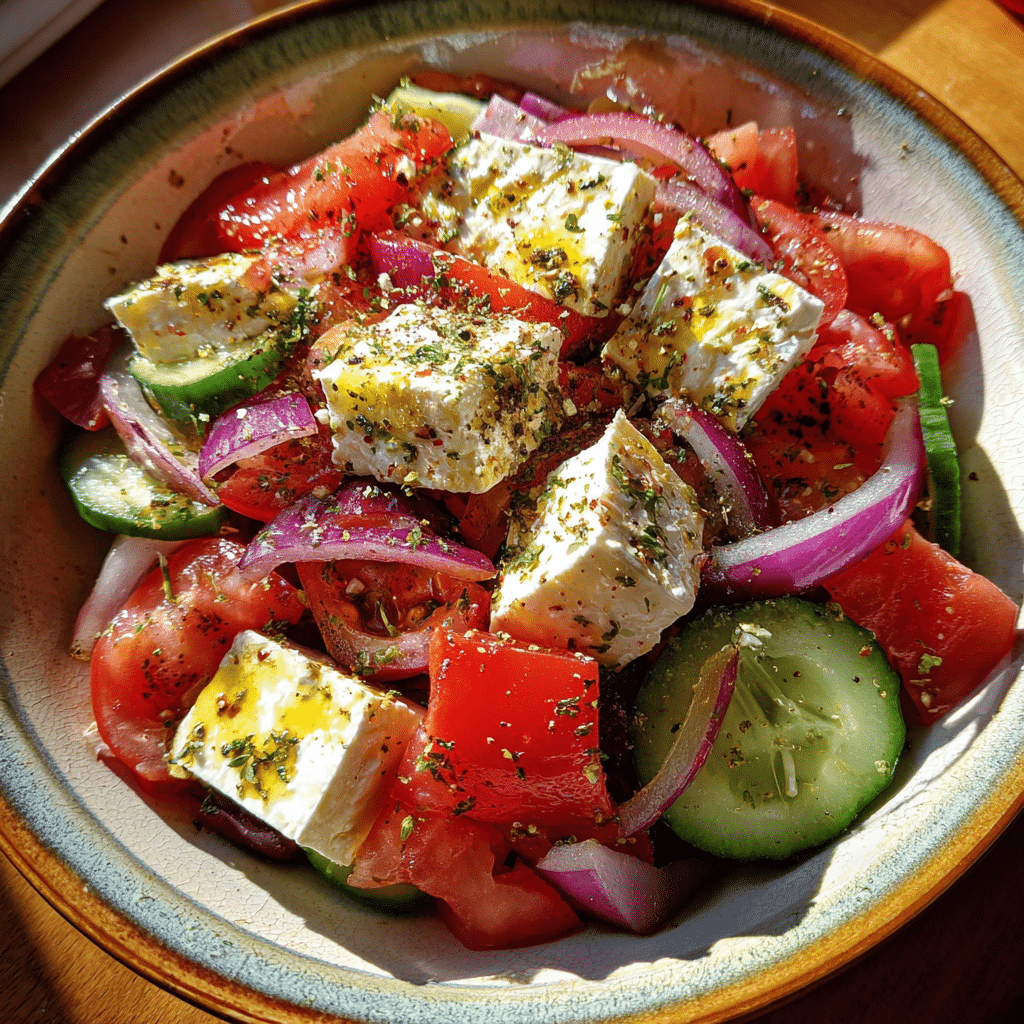
Are you tired of tossing together bland Greek salads that lack that authentic taverna flavor? I’ve been there too. This Greek salad recipe transforms ordinary ingredients into a vibrant Mediterranean masterpiece that will transport you straight to the shores of Santorini.
Hi, I’m Michael, the heart behind Foodydish! My journey with Greek salad began during a cooking retreat in the Peloponnese region, where a local chef shared his family’s time-honored secrets. Since then, I’ve perfected these techniques in my own kitchen, bringing that authentic Mediterranean magic to everyday meals.
In this guide, I’ll reveal the seven essential secrets that elevate a simple Greek salad into a restaurant-worthy experience. We’ll cover everything from selecting the perfect tomatoes and cucumbers to the proper way to incorporate feta and the exact olive oil ratio that makes all the difference. Whether you’re preparing a quick lunch or hosting a dinner party, these tips will ensure your Greek salad shines as a star dish rather than an afterthought.
Why This Greek Salad Recipe Works
- Uses readily available fresh ingredients that don’t require specialty stores
- Takes just 15 minutes to prepare from start to finish
- Perfect for meal prep, potlucks, or as a refreshing summer side
- Authentic techniques create restaurant-quality flavor at home
- Versatile enough to complement any Mediterranean or everyday meal
- Packed with nutrients while delivering incredible taste
Choosing the Right Ingredients for Greek Salad
The Foundation: Tomatoes & Cucumbers
The soul of any Greek salad begins with perfectly ripe tomatoes. Look for firm, fragrant tomatoes with deep red coloring—Roma or vine-ripened varieties offer the ideal balance of sweetness and acidity. For cucumbers, English or Persian varieties provide the perfect crunch without excess seeds or bitterness. In summer months, garden-fresh produce elevates your Greek salad to extraordinary heights.
The Perfect Feta
Not all feta is created equal! Traditional Greek salad demands authentic Greek feta made from sheep’s milk or a sheep and goat milk blend. Block feta preserved in brine delivers superior flavor and texture compared to pre-crumbled varieties. Look for “PDO” (Protected Designation of Origin) on the label for the most authentic experience.
Quality Over Quantity
A truly magnificent Greek salad relies on fewer, higher-quality ingredients rather than a long list of additions. Kalamata olives (with pits intact), fresh oregano, and extra virgin olive oil imported from Greece all contribute to that authentic taverna experience that can’t be replicated with substitutes.
Ingredients & Prep for Greek Salad
Fresh Produce Essentials
- 4 medium vine-ripened tomatoes, cut into wedges
- 1 English cucumber, sliced into half-moons
- 1 small red onion, thinly sliced
- 1 green bell pepper, cut into rings
- ½ cup Kalamata olives, whole with pits
- 200g block Greek feta cheese
The Perfect Greek Dressing
- ⅓ cup extra virgin olive oil (Greek preferred)
- 2 tablespoons red wine vinegar
- 1 teaspoon dried oregano (or 2 teaspoons fresh)
- 1 small garlic clove, minced (optional)
- ½ teaspoon sea salt
- Freshly ground black pepper to taste
Step-by-Step Greek Salad Instructions
Pre-Cooking Prep for Greek Salad
- Wash all produce thoroughly and pat dry with paper towels.
- Cut tomatoes into wedges and place in your serving bowl.
- Slice cucumber into half-moons approximately ¼ inch thick.
- Thinly slice red onion and soak in cold water for 5-10 minutes to reduce sharpness (Secret #1!).
- Core and seed bell pepper, then slice into thin rings.
Assembling Your Greek Salad
- In your serving bowl, gently combine tomatoes, cucumber, drained red onion, and bell pepper.
- Add Kalamata olives scattered throughout the vegetables.
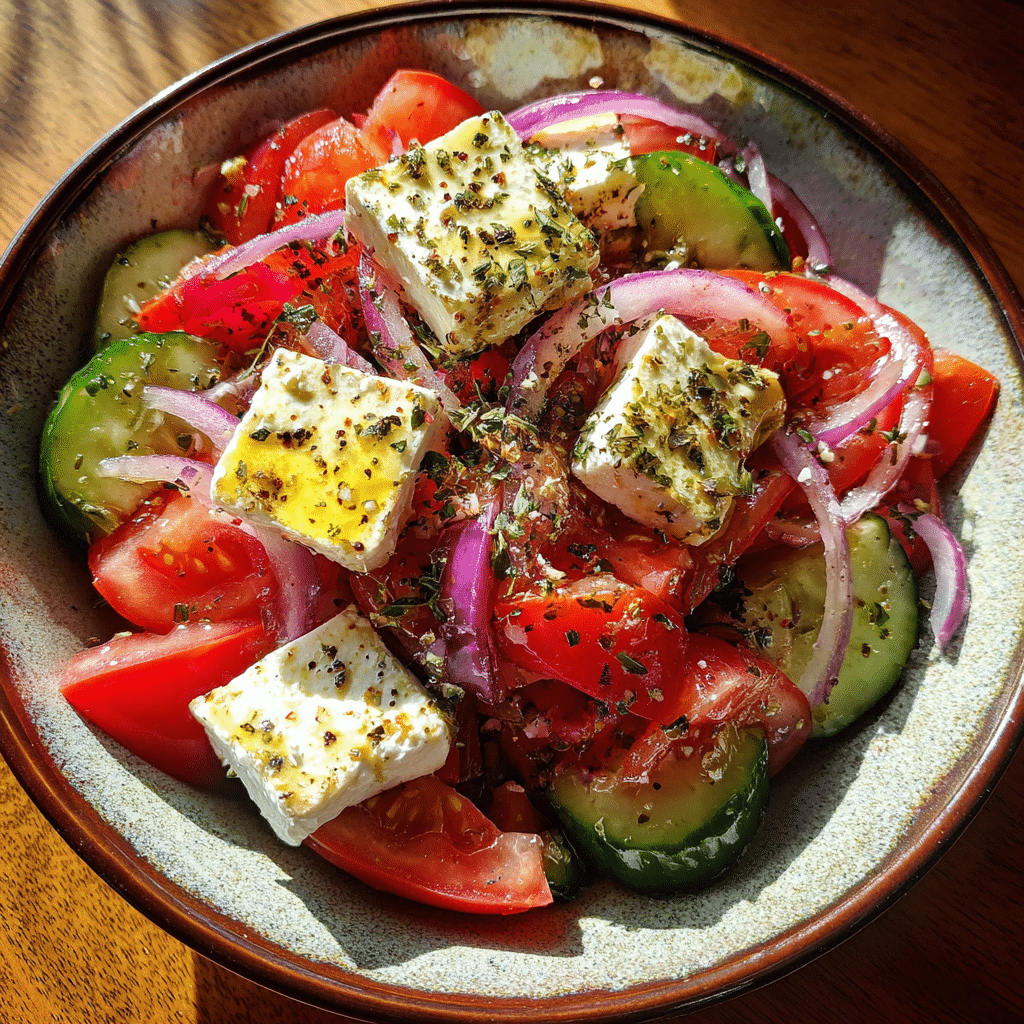
- Place the block of feta on top of the salad rather than crumbling it (Secret #2!).
- Drizzle the entire salad with olive oil and vinegar, allowing it to pool slightly at the bottom.
- Sprinkle with oregano, salt, and freshly ground pepper.
Dressing Your Greek Salad
- For best results, mix olive oil, red wine vinegar, oregano, garlic, salt and pepper in a separate small bowl.
- Whisk until emulsified, then drizzle over the prepared salad.
- Let the salad rest for 5-10 minutes before serving to allow flavors to meld (Secret #3!).
- Provide a serving knife for guests to cut the feta into desired portions.
Serving Greek Salad
Serve your Greek salad at room temperature, never cold from the refrigerator (Secret #4!). This allows the olive oil to maintain its proper consistency and the tomatoes to express their full flavor profile.
Pro Tips for Perfect Greek Salad
Avoiding Common Greek Salad Mistakes
- Never add lettuce to authentic Greek salad
- Don’t over-mix gentle tossing maintains texture integrity
- Skip the lemon juice traditional Greek salad uses only red wine vinegar for acidity
- Resist adding extra ingredients like avocado or chicken that dilute authenticity
Tool Recommendations for Greek Salad
- A large wooden bowl enhances presentation and prevents bruising delicate vegetables
- A sharp chef’s knife ensures clean cuts that preserve vegetable structure
- Proper olive oil dispenser for controlling the pour
Storage & Serving
- Prepare components ahead but assemble just before serving for maximum freshness
- If needed, store undressed components separately for up to 24 hours
- Always serve with crusty bread to soak up the flavorful olive oil that pools at the bottom
Looking for more Mediterranean inspiration? Check out my Pinterest board filled with vibrant, fresh recipes to complement your Greek salad adventure!
Flavor Variations for Greek Salad
Authentic Regional Greek Variations
- Cretan Style: Add capers, purslane, and barley rusks soaked in water
- Santorini Style: Include caper leaves and sweet Santorini cherry tomatoes
- Northern Greek: Incorporate green olives and white vinegar instead of red wine vinegar
Seasonal Adaptations
- Summer Enhancement: Add small cubes of watermelon for a sweet contrast
- Winter Variation: Roast bell peppers and serve with warm pita bread
- Spring Freshness: Incorporate fresh herbs like dill and mint
Dietary Accommodations
- Vegan Option: Replace feta with firm tofu marinated in nutritional yeast, lemon juice, and herbs
- Low-Carb Focus: Add extra feta and olives for a more substantial keto-friendly meal
- Extra Protein: Top with grilled chicken or shrimp for a complete meal
| Variation | Key Ingredients | Best Paired With | Prep Time |
|---|---|---|---|
| Classic Greek | Tomato, cucumber, feta, Kalamata olives | Grilled fish, lamb | 15 minutes |
| Cretan Style | Capers, purslane, barley rusks | Seafood dishes | 20 minutes |
| Santorini | Cherry tomatoes, caper leaves | White wines, grilled octopus | 15 minutes |
| Vegan | Marinated tofu, nutritional yeast | Bean dishes, falafel | 20 minutes |
Serving Suggestions for Greek Salad
A proper Greek salad stands confidently on its own, but truly shines when paired with complementary dishes. Serve alongside Vegetarian Shepherd’s Pie for an unexpected but delightful fusion meal, or make it part of a Mediterranean feast.
For lighter fare, pair your Greek salad with Shrimp and Avocado Bowls for a refreshing summer dinner. The bright acidity of the salad perfectly balances the richness of the seafood.
Traditional pairings include:
- Grilled lamb or chicken souvlaki
- Crispy spanakopita triangles
- Warm pita bread brushed with olive oil and oregano
- A glass of crisp Assyrtiko white wine from Santorini
FAQs about Greek Salad
Can I make Greek salad ahead of time?
You can prep the ingredients up to 24 hours ahead, but for best results, combine and dress the salad no more than 30 minutes before serving.
Is Greek salad healthy?
Absolutely! Greek salad is packed with vegetables, heart-healthy olive oil, and protein from the feta cheese. It’s naturally low in carbohydrates while offering substantial nutrition.
What can I substitute for feta cheese?
While authentic Greek salad traditionally contains feta, you can use mild goat cheese or even halloumi as alternatives. For a vegan option, firm tofu marinated in nutritional yeast works well.
My tomatoes aren’t very flavorful. What can I do?
If tomatoes aren’t in season, try using cherry or grape tomatoes which tend to have more consistent flavor year-round. Alternatively, roasting less flavorful tomatoes can concentrate their sweetness.
How do I keep my cucumber from making the salad watery?
After slicing cucumber, place in a colander, sprinkle with salt, and let sit for 15 minutes. Rinse and pat dry before adding to your salad (Secret #5!).
Conclusion
The magic of an authentic Greek salad lies not in complexity but in simplicity executed perfectly. By focusing on ingredient quality, proper preparation techniques, and balanced flavors, you can create a dish that transports you straight to a seaside taverna.
Remember the seven secrets we’ve covered: soaking red onions, keeping feta whole, allowing flavors to meld, serving at room temperature, salting cucumbers beforehand, using only the finest olive oil, and respecting the classic ingredient list without unnecessary additions.
I hope this guide inspires you to elevate your Greek salad game and share the joy of authentic Mediterranean flavors with friends and family. A proper Greek salad isn’t just food it’s an experience that celebrates the simple perfection of fresh ingredients coming together.
What’s your favorite way to enjoy Greek salad? Share your creations with our community and tag #FoodydishGreekSalad with your results!
Print
Greek Salad Magic: 7 Secrets to a Restaurant-Worthy Recipe
- Total Time: 15 minutes
- Yield: 4 servings 1x
Description
A classic Greek Salad bursting with fresh Mediterranean flavors crisp cucumbers, juicy tomatoes, briny olives, tangy feta, and a zesty lemon-oregano dressing. Simple, colorful, and refreshingly delicious!
Ingredients
2 cups cherry tomatoes, halved
1 large cucumber, sliced into half-moons
1/2 red onion, thinly sliced
1 green bell pepper, chopped
1/2 cup Kalamata olives, pitted
3/4 cup feta cheese, cubed or crumbled
2 tbsp extra virgin olive oil
1 tbsp red wine vinegar
1 tsp dried oregano
1/2 tsp salt
1/4 tsp black pepper
1/2 lemon, juiced
Fresh parsley for garnish
Instructions
1. In a large bowl, combine tomatoes, cucumber, red onion, and bell pepper.
2. Add Kalamata olives and feta cheese.
3. In a small bowl, whisk together olive oil, red wine vinegar, lemon juice, oregano, salt, and black pepper.
4. Pour the dressing over the vegetables and toss gently to combine.
5. Taste and adjust seasoning as needed.
6. Garnish with fresh parsley and a sprinkle of oregano before serving.
Notes
For a more authentic touch, keep the feta in large blocks rather than crumbling.
Add capers or anchovies for extra briny flavor.
Serve with warm pita bread or grilled chicken for a complete meal.
This salad tastes even better when chilled for 30 minutes before serving.
- Prep Time: 15 minutes
- Cook Time: 0 minutes
- Category: Salad
- Method: No Cook
- Cuisine: Greek
Nutrition
- Serving Size: 1 1/2 cups
- Calories: 180
- Sugar: 5
- Sodium: 410
- Fat: 14
- Saturated Fat: 5
- Unsaturated Fat: 8
- Trans Fat: 0
- Carbohydrates: 8
- Fiber: 2
- Protein: 6
- Cholesterol: 25
Keywords: greek salad, mediterranean salad, feta salad, cucumber tomato salad, healthy salad recipe